
Trading
Lumber Tycoon 2 trading guide: what drives item value, how to read a price list, and the scam patterns that catch new players in the player-run economy.
Introduction
A large part of Lumber Tycoon 2 happens between players rather than inside the map. Axes that are no longer on sale, seasonal event items and rare collectibles cannot be bought from a store at any price, so the only way to obtain them is to trade, and that has produced its own economy with value lists, community price checks and a long history of scams aimed at new accounts. Understanding why something is valuable matters more than memorising a number, because prices move quickly and an outdated list is worse than no list at all. This section explains what actually drives value, how to read a price check sensibly, and the specific patterns that separate a normal trade from an attempt to part you from an item.
Value Drivers
| Factor | Effect On Value | How To Check | Notes |
|---|---|---|---|
| Discontinued supply | Raises value permanently | Confirm it is no longer sold or spawned | The strongest single driver in the game |
| Event ownership | Raises value while the event is remembered | Identify which event it came from | Older event items usually outperform recent ones |
| Quantity in circulation | Lowers value as supply grows | Ask how common the item feels in trades | Hard to measure directly, learned from experience |
| Practical usefulness | Raises value for tools still used | Test whether players farm with it | An axe keeps demand even when collectibles do not |
Trading Topics
Reading A Value List
What a price list can tell you, and the large part of the market it cannot.
Trade Window Discipline
Doing the trade in one step, with both items visible, every single time.
Common Scam Patterns
The recurring tricks that catch new players every week, and the one rule that defeats most of them.
Trade Etiquette
How to trade repeatedly with the same people without burning your reputation.
Discontinued Axes And Seasonals
The category where trade value and farming value stop agreeing with each other.
Core Mechanics
Player value is demand driven, not cost driven. A discontinued axe is worth more than a better axe you can still buy, because the second one can be acquired by anyone at any time and the first cannot be acquired at all. Four factors then adjust the picture. Supply, which stops when an item leaves the store or the event closes. Age, since older event items usually carry more prestige than recent ones. Practical use, which keeps tools in demand even when collectibles lose interest. And market mood, which moves faster than any published list and is the reason a number has a shelf life. Because the trade window is the only mechanism the game provides, the mechanics of executing a trade safely matter as much as the valuation, and a fair price agreed in an unsafe structure is still a loss waiting to happen.
Advantages
The player economy gives Lumber Tycoon 2 a second game running alongside the farming loop. Items that would otherwise become irrelevant once the event closes retain purpose, and long-term players have a reason to keep logging in after they have solved the production side of the game. Value is genuinely earned through scarcity rather than assigned by the developer, which makes a good trade feel like an achievement, and the community value lists, whatever their faults, give newcomers a starting point that a pure barter system would not. Because trading is entirely optional, players who dislike it can ignore it without being locked out of any farming content.
Challenges
Trading is the least forgiving part of the game for a new player. Nothing in the interface indicates what anything is worth, prices move weekly, and every published list carries an unstated date, so the information you need is both essential and unreliable. That gap is exactly what the scam ecosystem lives on, and the patterns recur because they work. Valuation is also genuinely subjective at the high end, since the rarest items trade so infrequently that there is no meaningful sample to price them against. The result is that experienced traders have a real advantage that is learned socially rather than in game, and players who trade alone are exposed until they have been burned at least once.
Frequently Asked Questions
How do I know what my item is worth in Lumber Tycoon 2?+
How do I avoid getting scammed?+
Are discontinued axes worth more than new ones?+
Can I trade without using Discord or outside communities?+
Quick Tips
Check the date before you check the number. A value list written before the last update is priced against a market that no longer exists, so an old figure can be further from the truth than no figure at all, no matter how confidently somebody quotes it at you. and the market it describes may have moved twice since it was first written.
Never let an item leave your inventory outside the trade window. Dropping an item, trading in stages or trusting a middleman all transfer the risk onto you alone, and no explanation whatsoever makes that structure safer than a single simultaneous exchange with both sides visible on screen. so treat any request for a staged handover as a reason to walk away completely.
Screenshot every completed trade, even the small ones. It takes a second and it gives you the only durable record of what actually changed hands, which matters when a price is disputed later and when you want to reconstruct your own trading history months afterwards. even when the trade felt routine at the time and nobody seemed to be in a hurry.
Trade with the same people repeatedly once you find somebody fair. Reputation is the only asset in this economy that compounds over time, and a small circle of traders who honour agreed deals is worth far more than any single favourable trade you might chase elsewhere. and the traders who last are the ones who keep their word on the small deals too.
Featured

Lumber Tycoon 2 Market Prices: Sell Cornucopia and Plain Axe
Check lumber tycoon 2 market prices for the Cornucopia, Plain Axe, and Fine Arts Shop paintings so you know what to sell and where to cash out safely.
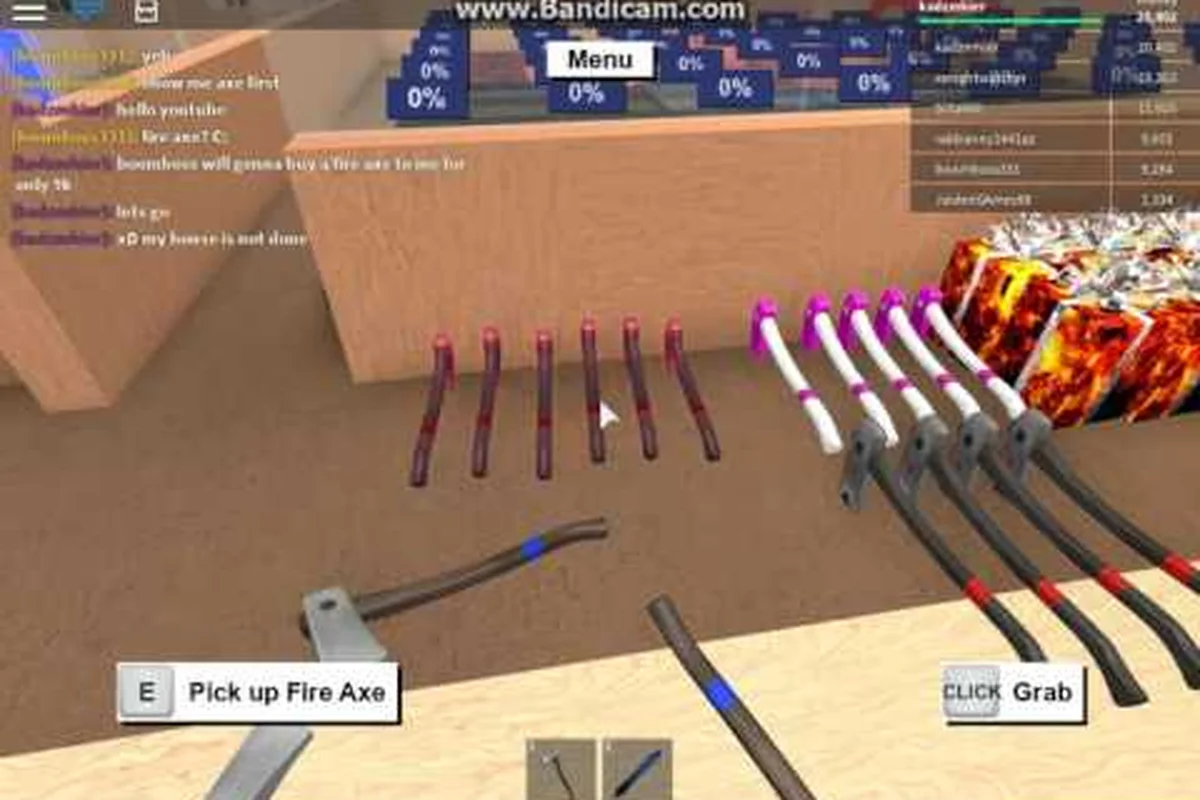
Lumber Tycoon 2 Trading: Stocking Up and Long Planking Methods
Master lumber tycoon 2 trading with stocking up on limited items before they vanish, long planking thin boards for profit, and Link's Logic gear that helps you sell.

Lumber Tycoon 2 Trading Guide: Unit Values and Safe Deals
Master the lumber tycoon 2 trading guide with Unit measurements for logs and planks, current 2026 value checks, and how to spot scams in 345K-member fan hubs.
All Articles
Lumber Tycoon 2 Discord Server Trading: Etiquette and Cooldowns
Master lumber tycoon 2 discord server trading with tips on trade cooldowns, etiquette, and how Units measure logs and planks so you never overpay in a deal.

Lumber Tycoon 2 Gift Value List for 2026 Price Checks
Check the lumber tycoon 2 gift value list for 2026 trades, from the 2025 Gift of Comfort Car Seat to the Wobbly Gift of Mostly Teal and rare Christmas unboxings.

Lumber Tycoon 2 Rare Axe Trading: Avoid Scams and Traps
Master lumber tycoon 2 rare axe trading by spotting notable scammers, skipping trust trades, and grabbing limited gifts like the Alpha Axe of Testing.

Lumber Tycoon 2 Trade Server: Join the 345K-Member Fans Hub
Find a lumber tycoon 2 trade server through the 345K-member LT2 Fans group, learn where the community meets to swap items, and avoid scams that plague loose trading.